

Last Updated: September 16, 2026
It’s a fundamental piece of my health, similar to diet and exercise, quality sleep underpins many areas of our health including: brain function, emotions, immunity and cardiovascular health. Chronic insufficient sleep caused by current day lifestyles, stress and poor sleeping behaviors are a global problem.
Learn why sleep is so important, how it’s affecting your health and get the latest practical techniques recommended by leading medical associations that really work to sleep better safely and naturally.
Understanding how sleep fits into your overall well-being can also help you build a healthier daily routine. For more information, explore this guide to good health.
Table of Contents
Why Sleep Is Essential for Complete Health
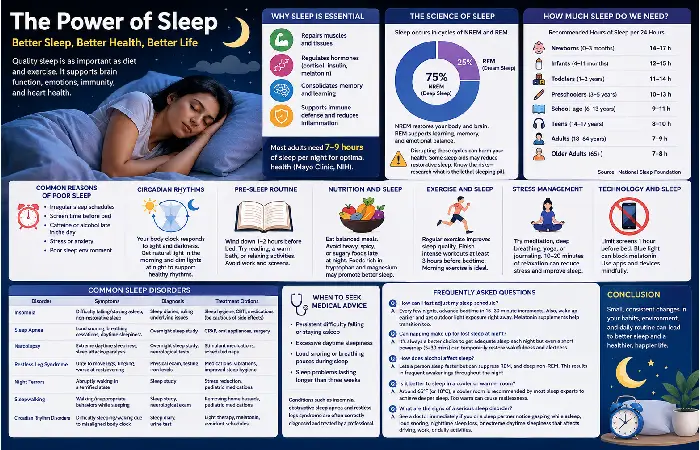
Sleep is an active biological process. During sleep, the body:
- Repairs muscles and tissues
- Regulates hormones such as cortisol, insulin, and melatonin
- Consolidates memory and learning
- Supports immune defense and inflammation control
The optimal amount of sleep for most healthy adults is 7 to 9 hours per night, suggests Mayo Clinic, as reported by the National Institutes Health (NIH).
Repeated violation would result in heightened likelihood of acute and/or chronic illnesses
The Science of Sleep: Stages and Cycles
Your night time sleep process happens in cycle(s) with both NREM and REM(Rapid Eye Movement) stages: about 75 percent of sleep is NREM or ‘Resting sleep’ which physically restores your body and brain. It is the stage linked with most dreams of which you’re more likely to remember, and essential for things like learning.
Disrupting these cycles is an unhealthy thing to do. Certain sleep aids alter sleep architecture; that is they shorten the time spent in refreshing sleep phases. In order to know risks which can arise by consuming particular sleeping pill, investigate, what is the lethal sleeping pill.
How Much Sleep Do We Need? Age-specific Recommendations
Though most adults are recommended 7–9 hours of sleep a night by the National Sleep Foundation, individual sleep needs may change throughout your life as well. Young children and adolescents are set to this slightly different range as these children require more sleep due to the amazing rate they grow-mind and body.
Common Reasons of Poor Sleep
Many sleep problems are lifestyle-related and reversible. Common contributors include:
- Irregular sleep-wake schedules
- Excessive screen exposure before bedtime
- Late-day caffeine or alcohol intake
- Chronic stress or anxiety
- Poor sleep environment (noise, light, temperature)
Being able to identify and treat these issues would provide a foundation for sleep enhancement.
The Role of Circadian Rhythms in Sleep
(Body clocks) This is the scientific way of describing how wakefulness and sleep timing: Body clocks know natural fluctuations and cycles in the body- rhythms that require information of the outside – light and darkness, to turn us awake when it’s light and sleepy when it’s dark. By respecting our body clock we can sleep well.
The Importance of a Pre-Sleep Routine
Set a night time ritual Creating a bedtime routine can send your body into sleep-mode and let it know it’s time to calm down. Taking a long warm bath, reading a chapter in a book, or enjoying nature’s calming ritual are all good examples of bedtime rituals. Put down that device and turn off that work 1-2 hours before you hit the sheets.
Nutrition and Sleep
Your choice of diet and foods and timing of meals definitely influence amount and quality of sleep. Taking large quantities of food before going to the bed may make it difficult for the people to sleep, as the body is required to digest the food, which takes time. Also different foods and beverages taken prior to sleeping.
Foods with high fat content and sugar make people anxious. Some foods are helpful for sleep because of their content of tryptophan and magnesium. Eating foods with high fat and rich in calories before going to bed and having big meals is detrimental to sleep.
A balanced diet can include nutrient-rich foods such as spinach. Learn more about the health benefits and nutritional value of spinach when considering nutritious food choices.
Exercise and Sleep
Diet and Sleep quality How? Not only the diet but exercise is directly linked to affect sleep duration & quality. Exercise can increase REM stage and decrease sleep amount. If you do exercise more often it may shorten the amount of REM sleep by stimulating alertness and increasing deeper sleep by boosting amounts of Non-REM sleep.
Schedule your exercise: Try to complete any hard physical exercise at least 3 hours before your bedtime. Exercising in the morning or early afternoon will not only build your diurnal rhythms but also aid in feeling alert during the morning and relaxed in the night.
Stress Management and Sleep
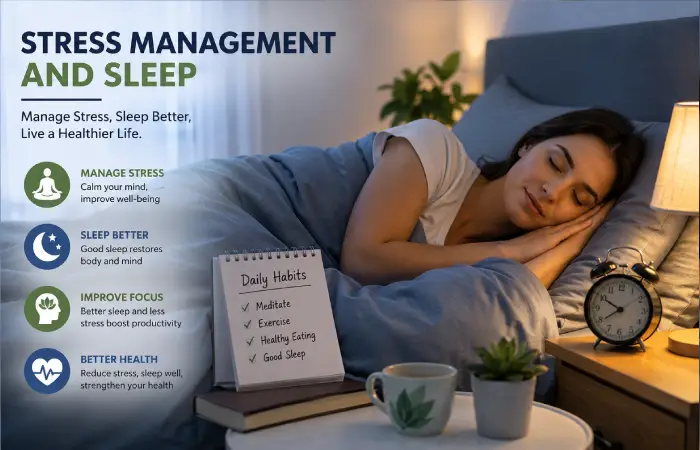
In this incredibly stressful modern era, stress frequently undermines and undoes adequate shuteye even in people who are most drained. Thoughts accelerate emotions so as to hinder the ability to fall asleep and maintain sleep. This cycle of sleep-and stress- perpetuates and creates a negative, harmful cycle in both the mental and physical health domains. Breaking out of this cycle involves active management of stress with data-driven solutions.
Relaxation practices dampen the brain’s “fight or flight” response that enables winding down for rest. The ancient practice of meditation trains to focus attention to summon calming relaxation while dismissing intrusive thoughts. Apps now make guided meditation widely accessible. Yoga similarly melds gentle poses with breath focus to discharge tension.
A tiny habit-only 10 to 20 minutes- of nightly relaxation will build your tolerance to be more resistant when the stress happens before bed. You could additionally have some success with clinical practices known to deal with your thoughts patterns or phobias that maintain sleep. Psychology practices are constructed to interrupt your frustration/ performance cycle.
Apps and Gadgets That Promise Better Sleep: Do They Work?
Luckily, there are also other devices and apps available that promise to increase your chances of getting a restful night of sleep – so if you don’t already use one of those gadgets or apps that claim to help you sleep better such as: as well, remember that those too can have real merits if applied correctly.
Creating a Technology-Free Bedtime Routine
Create a device-free routine in order to tell your brain that you’re preparing for sleep. This could be reading a good book, having a warm bath, practicing mediation, or other relaxing activities.
Sleep Disorders
Inform yourself about sleep disorders: Insomnia, sleep apnea, restless legs syndrome, narcolepsy are few examples If problems persist despite improvements you can visit a doctor for sleep problem treatment
A professional can offer diagnoses and tailored treatments. Here are some sleep disorders that are compared with symptoms, diagnosis, and treatment options.
| Disorder | Symptoms | Diagnosis | Treatment Options |
|---|---|---|---|
| Insomnia | Difficulty falling/staying asleep, non-restorative sleep | Sleep diaries, ruling underlying issues | So, Sleep hygiene, CBTi, medications { though be cautious of side effects, as some wonder: which sleeping pill is dangerous?} |
| Sleep Apnea | Loud snoring, breathing cessations, undue daytime sleepiness | Overnight sleep study | CPAP, oral appliances, surgery |
| Narcolepsy | Extreme daytime sleepiness, sleep attacks/paralysis | Overnight sleep study, neurological tests | Stimulant medications, scheduled naps |
| Restless Leg Syndrome | Urge to move legs, tingling, worse at rest/evening | Physical exam, testing iron levels | Medications, vibrations, improved sleep hygiene |
| Night Terrors | Abruptly waking in a terrified state | Sleep study | Stress reduction, pediatric medications |
| Sleepwalking | Walking/inappropriate behaviors while sleeping | Sleep study, neurological exam | Removing home hazards, pediatric medications |
| Circadian Rhythm Disorders | Difficulty sleeping/waking due to misaligned bio clock | Sleep diary, urine test | Light therapy, melatonin, avoidant schedules |
When to Seek Medical Advice
Consult a fit healthcare provider if you knowledge:
- Persistent difficulty falling or staying asleep
- Excessive daytime sleepiness
- Loud snoring or breathing pauses during sleep
- Sleep problems lasting longer than three weeks
- Conditions such as insomnia, obstructive sleep apnea and restless legs syndrome are often correctly diagnosed and treated by a professional.
Conclusion
Lots of us want and need to sleep at night, for the sake of our wellness, our health, our and safety. There isn’t one magical cure for sleep problems, of course – yet we can use our lifestyles and technology usage for better sleep health, according to established science.
Make one or two subtle changes to your bedtime habits, home, or work out routine. Sticks with those changes for a month and see whathappens. Eventually, even your days will become brighter ,as the nights become healthier and more peaceful. And all of us deserve awakening refreshed and alive for yet another new day.
For practical guidance on improving sleep habits as part of a healthier lifestyle, you can also explore enhancing health through better sleep.
Frequently Asked Questions
How can I fast adjust my sleep schedule?
Every few nights, advance bedtime in 15 to 30 minute increments. Also, wake up earlier and get outdoor light exposure right away. Melatonin supplements help transition too.
Can napping make up for lost sleep at night?
It’s always a better choice to get adequate sleep each night but even a short powernap (5-30 mins) can temporarily restore wakefulness and alertness .
How does alcohol affect sleep?
Lets a person sleep faster but can suppressREM, and deep non-REM. This results in frequent awakenings throughout the night since it is metabolized in the liver by these enzymes when it is taken orally.
Is it better to sleep in a cooler or warmer room?
Around 65F (or 18C), a room cool temperature may be recommended by more sleep experts in order to achieve sleep at deeper phases overnight. If the room is too warm, you are more likely to be restless.
What are the signs of a serious sleep disorder?
See a doctor immediately if you or a sleep partner have one or more of these:
The gasping sound while asleep. Loud snoring. Night time sleep loss. Extreme daytime sleepiness that you struggle to control when doing a activity like driving or working.
Good Health Resource Hub
Explore practical guides covering healthy lifestyle habits,
nutrition, better sleep, public health and simple ways to
improve your overall well-being.
For evidence-based information about sleep and healthy sleep habits, visit the National Heart, Lung, and Blood Institute’s Sleep Deprivation and Deficiency resources.