

Last Updated: September 16, 2026
How long should I wait to workout after eating Knowing the time interval to wait to work out after eating can really impact on the comfort and performance of your workout. If you workout to soon after eating a large meal you may find yourself feeling full, slow or uncomfortable. On the other hand if you don’t eat for to long you may feel hungry and lack energy.
All appointments or bookings Every time it can take – it is somewhat determined by how much you’ve eaten, the particular meal related to, what form of exercise you’re going to participate in, and what is most effective for your digestive system.
This Article Is Belongs To The Workouts & Exercise
Table of Contents
How Long Would I Wait to Workout After Eating?
A rough rule of thumb to follow is 2-3 hours after a full meal before training hard. If you’ve only had a smaller meal or snack, it’ll probably be much less.
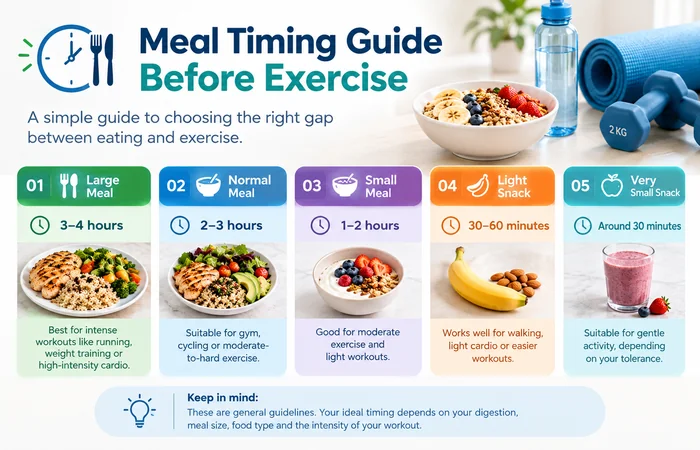
A practical guide looks like this:
| Food intake | Typical waiting period | Suitable activity |
| Large/heavy meal | 3–4 hours | Running, weight training, intense cardio |
| Normal balanced meal | 2–3 hours | Gym, cycling, moderate-to-hard exercise |
| Small meal | 1–2 hours | Moderate exercise |
| Light snack | 30–60 minutes | Walking, light cardio, easier workouts |
| Very small snack | Around 30 minutes | Gentle activity, depending on tolerance |
Why Does Timing Matter?
After eating you immediately star to process the foods you eat with your gastrointestinal or GI, tract. The digestion time varies from person to person and meal to meal and depends on the amount of food and the type of food you consume.
The Mayo Clinic estimates that food spends about six hours being digested in the stomach and small intestines.
The most we can do is avoid working out post complete digestion of your food – what you should really be doing is playing the waiting game, so your body has had the time to prep to work but also have some of that food circulating in your system.
What Happens If You Exercise Too Soon After Eating?
Working out shortly later a huge meal does not automatically mean something unsafe will occur. But, it can be painful for some persons.
Possible symptoms include:
- Feeling excessively full
- Stomach discomfort
- Cramping
- Nausea
- Reflux or heartburn
- Feeling sluggish
- Reduced workout comfort
Some foods also may cause issues. Fatty foods and larger meals take longer to digest and also may cause more discomfort prior to beginning your workout, Cleveland Clinic suggests. When exercising close to your meal time, have a later than usual digestion window and go for more simple foods.
High-intensity exercise directly after eating can be particularly painful. A gentle walk is a different condition from sprinting, heavy squats or an intense interval trial.
Does the Size of Your Meal Change How Long You Should Wait?
Yes.
Eating less – Knowing when to workout is a simple calculation of how much you ate. Lunch of rice, meat, vegetables, sauces and pudding will be slower to bounce back from than a banana or a small yoghurt.
For example:
Large meal at 1:00 pm → hard workout around 4:00 pm or later
Small snack at 1:00 pm → light workout round 1:30–2:00 pm may be easy for some people
These are just guides, not solutions. Your individual reaction counts. If you often struggle to train after eating, try eating less or allow more time to pass.
What You Eat Before Exercise Matters
Meal timing is only one part of pre-workout diet.
The arrangement of your meal can also effect how you feel.
Carbohydrates
Carbohydrates are the key fuel basis of workout. Oats, fruit, rice, vegetables and bread are samples of foods that cover useful carbohydrate content to contain in your pre-exercise meal.
Protein
Protein supplies some amino acids that help maintain and repair muscle. A moderate portion of lean protein, in the portion of a pre-exercise meal, can be beneficial.
Examples include:
- Greek yoghurt
- Eggs
- Chicken
- Fish
- Milk
- Tofu
Fat
A high-fat meal, very high in fat, an hour or two just before exercise, although part of a balanced diet, could be more difficult for some people to tolerate, since fat takes longer to digest.
Fibre
Why fibre is so good for you Fibre is great for your health but if you get a large dose of fibre right before any type of hard exercise.
it may just lead to a little bit of grief in the gut. The closer to your exercise you get, the more main it is that you’re eating foods that you see you can résumé.
What Should I Eat Before a Workout?
There is no universal pre-workout mealtime.
Your choice should depend on the time existing and the workout you are planning.
If You Have 3–4 Hours
You can generally have a normal balanced meal.
For example:
- Chicken with rice and vegetables
- Oatmeal with yoghurt and fruit
- Wholegrain sandwich with lean protein
- Rice, tofu and vegetables
If You Have 1–2 Hours
Choose something smaller and relatively easy to digest.
Examples include:
- Yoghurt with fruit
- Oatmeal
- Toast with a small amount of nut butter
- Banana and yoghurt
- Small smoothie
If You Have 30–60 Minutes
A light snack may be more appropriate than a full meal.
Examples include:
- Banana
- Fruit
- Small yoghurt
- Low-fibre cereal
- Small smoothie
Mayo Clinic and Cleveland Clinic together provide similar practical guidance: the earlier you are to workout, the brighter and easier-to-digest your food must usually be.
How Long Should I Wait After Breakfast Before Working Out?
case in point, it could be around 1 hour after having a minor breakfast. If you have a large, carbohydrate-rich breakfast that will digest more gently, you must wait longer.
For example:
Light breakfast:
Banana + yoghurt → approximately 30–60 minutes may work.
Normal breakfast:
Oatmeal + eggs + fruit → approximately 1–2 hours may be more comfortable.
Large breakfast:
Several servings of food → 2–3 hours or longer may be preferable before intense exercise.
How Long Should I Wait After Lunch Before Exercising?
A main portion of a pre-workout meal mid afternoon A tasty, filling and healthy food or meal can boost your energy earlier an intense workout.
If you have had a typical balanced lunch, 2-3 hours before a high-power workout is a good place to start.
For example:
12:30 pm: Lunch
3:00 pm: Gym session
You’ve eaten a large, very greasy or spicy lunch: then wait a little longer. You’ve eaten quite a light lunch and your exertion level is fairly low: then you should probably be able to leave it a little early.
Can I Walk Immediately After Eating?
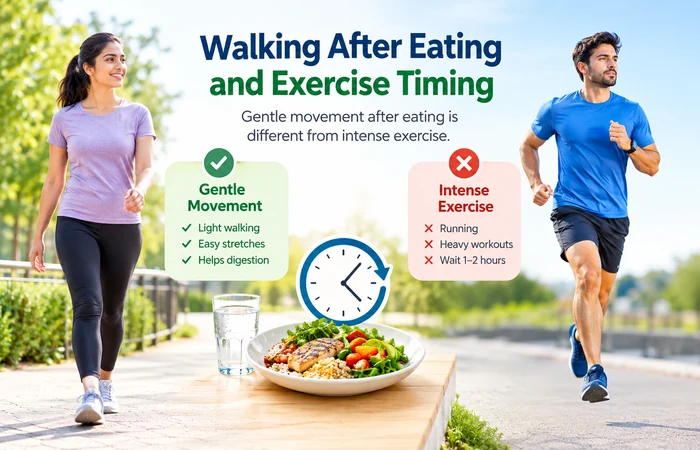
Walking isn’t high-impact exercise Most of us can enjoy walking after we’ve had a bite to eat, as a laid-back way to incorporate some extra activity into our daily routine without engaging the body the way intensive exercise does.
As noted by the Cleveland Clinic, walking after a meal might actually promote stomach emptying and blood sugar regulation and recommends a short walk 15-30 minutes after eating.
That doesn’t mean you need to hit the pavement for a run, engage in a heavy resistance training session or do any kind of high-intensity interval training following a substantial meal.
A Simple Rule
Walking: often possible soon after eating.
Moderate exercise: give yourself more time.
Hard exercise: allow a longer gap after a substantial meal.
Workout Timing Workflow
If you are unsure when to exercise after eating, use this simple process.
Step 1: Identify What You Ate
Was it:
- A large meal?
- A normal meal?
- A small meal?
- A snack?
Step 2: Consider the Workout
Ask whether you are planning:
- A gentle walk
- Yoga
- Strength training
- Cycling
- Running
- HIIT
- A sports session
The harder the workout, the more main comfort and breakdown become.
Step 3: Consider Your Digestion
Consider your experience before. If you repeatedly have reflux, nausea or cramps following exercise immediately after a meal, add more hours.
Step 4: Begin Slow If in doubt,
give yourself extra time instead of trying to run or do crunches when you feel uneasy.
Step 5: Adjust Based on Experience
Keep path of what you had, when you ate and how you felt thru exercise.
Over time, you can identify your own ideal pre-workout timing.
Does Exercising After Eating Affect Performance?
It can.
Having something to eat prior to exercising can also give you some energy and can even contribute to getting a longer or more intense workout. The Mayo Clinic says eating carbs before exercising may even improve how you perform while exercising, especially for longer workouts.
But, if consuming excessive volumes of calories in a short space of time results in digestive upset, this may backfire from a practical perspective.
The goal is not just to gap yourself on food before workout.
What About Exercising on an Empty Stomach?
Some will choose for a workout before the breakfast or more than 60 minutes after the mealtime.
For some, it may be a comfortable option, especially when doing a low volume, moderate to lower intensity workout. It’s not necessarily a superior option, however.
Similarly, Cleveland Clinic says there are individual variations in comfort level when it comes to working out on an empty stomach.
Expectations: There Is No Perfect Number
One of the biggest delusions about pre-workout eating is that everyone needs exactly the same waiting period.
They do not.
Two people can eat the same meal and have different experiences.
Your ideal timing may change depending on:
- Meal size
- Fat content
- Fibre content
- Hydration
- Exercise intensity
- Workout duration
- Time of day
- Individual digestion
- Training experience
Someone going on a long run might need a changed type of preparation than somebody doing a 20-minute walk.
A gym workout for exciting doesn’t mean you need the same diet as an sportsperson.
What If I Feel Sick During a Workout?
Stop immediately if you start to feel unwell, faint, dizzy, weak, nauseous, symptoms in chest or stomach, or short of breath. Don’t do the whole workout just for the sake of doing it! Know the signs that you need to eat before exercise as this can really affect your blood sugars.
Is It Better to Exercise Before or After Eating?
Neither choice is generally better.
The answer be contingent on your goal, idea and in what way your body replies.
Exercising Before Eating May Suit You If:
- You prefer morning workouts.
- You feel comfortable exercising without food.
- Your workout is relatively short.
- Eating beforehand makes you uncomfortable.
Exercising After Eating May Suit You If:
- You feel low on energy when exercising fasted.
- You are doing a longer workout.
- You are training at higher intensity.
- You have several hours available between a meal and exercise.
Common Mistakes to Avoid
Eating a Huge Meal Immediately Before Training
A large meal right before intense exercise can increase the chance of digestive discomfort.
Assuming More Food Means More Energy
More food is not necessarily better if it makes you feel heavy during exercise.
Drinking Too Little
Hydration also materials. Mayo Clinic recommends drinking liquids before, during and after workout.
Copying Someone Else’s Routine
Your training partner may comfortably run 30 minutes after a snack while you may need an hour.
Individual tolerance matters.
Ignoring Symptoms
Tenacious sickness, dizziness, reflux or pain thru workout should not just be cleared as part of training.
Quick Reference: How Long Should You Wait?
| Situation | Practical starting point |
| Large meal before hard workout | 3–4 hours |
| Normal meal before workout | 2–3 hours |
| Small meal | 1–2 hours |
| Light snack | 30–60 minutes |
| Gentle walk after meal | Often possible relatively soon |
| High-intensity workout after heavy meal | Allow more time |
Not hard and fast rules These timelines are approximate and not ‘medical rules’ for nutrition. Cleveland Clinic and Mayo Clinic sports nutrition references about how big a meal should be and when and how well one can tolerate them is similar to what I have mentioned.
Faq’s
How long should I wait to work out after eating?
When Must I Eat Before At work Out? Two-three hours if you are having the regular meal. 3-4 hours if you just had a filling meal & 30-60 mins for the some foods.
Can I work out 30 minutes after eating?
It will just be a matter of what you ate and how intense your workout was. Half an hour after eating can be fine if you just ate a small, simply digestible snack, but a big meal right before a vigorous exercise can upset your stomach.
Can I walk straight after eating?
A gentle walk can often be done soon after eating. Cleveland Clinic notes that mobile within 15–30 minutes of a meal may support gastric emptying and glucose management.
Is it bad to exercise immediately after eating?
Should I walk as soon as I eat a lot? A: No, keep on walking if you want to avoid heartburn or upset stomach. Also, your stomach is probably distended, sore, sore stomach or you have a stomach ache. So, that walk would be different.
How long should I wait to work out after the heavy meal?
Return waiting around 3–4 hours before a tough training after a full meal. You may basic longer if you still texture full or sore.
Final Takeaway
When can I exercise after eating? 2-3 hours after the regular dinnertime is a sensible time to give yourself before undertaking an intense workout. After a larger meal, you may find it more comfortable to wait 3-4 hours & for the small snack just after the 30-60 minutes.
When precisely to wait is individual. Listen for the style and amount of food, the situation of your workout and just how you feel.
There is no need to hold back for totally, digesting your food before exercising. Gentle workout, as an example, walking, might be comfortable relatively quickly after eating, whereas pounding, as well as high-intensity training, can require much more wait.