Modern healthcare systems are undergoing a significant transformation driven by digital innovation, data analytics, and value-based care models. One of the most important components of this transformation is the adoption of electronic Clinical Quality Measures (eCQM). These measures are designed to evaluate the quality of care provided by healthcare organizations using data extracted directly from electronic health records (EHRs) and other digital health systems.
As healthcare shifts from volume-based to value-based care, the need for accurate, real-time, and standardized quality measurement has become essential. eCQM plays a pivotal role in this shift by enabling providers, payers, and policymakers to assess performance, improve patient outcomes, and ensure compliance with regulatory standards.
Table of Contents
Understanding eCQM in Healthcare
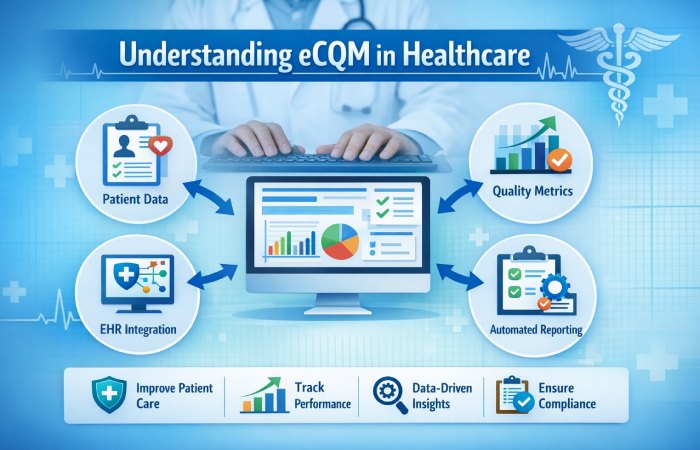
Electronic Clinical Quality Measures (eCQM) are tools used to measure and track the quality of healthcare services provided by clinicians and hospitals. Unlike traditional manual quality measures, eCQMs leverage structured data from EHR systems to automate the reporting process.
These measures focus on various aspects of patient care, including:
- Patient safety
- Clinical effectiveness
- Care coordination
- Patient engagement
- Population health
The use of eCQM allows healthcare providers to monitor performance continuously and make data-driven decisions that enhance patient care.
Key Components of eCQM
To understand how eCQM functions, it is important to break down its core components.
| Component | Description |
| Measure Specifications | Defines how a quality measure is calculated |
| Data Elements | Includes patient data such as diagnosis, procedures, and lab results |
| Logic and Algorithms | Determines how data is processed to produce measure results |
| Reporting Standards | Guidelines for submitting quality data to regulatory bodies |
| EHR Integration | Enables automatic extraction of data from electronic systems |
These components work together to ensure that quality measures are accurate, consistent, and comparable across healthcare organizations.
Importance of eCQM in Modern Healthcare
The role of eCQM in modern healthcare systems extends far beyond simple reporting. It serves as a foundation for improving healthcare quality, efficiency, and accountability.
Enhancing Patient Outcomes
By providing real-time insights into patient care, eCQMs help clinicians identify gaps in treatment and take corrective actions. For example, measures related to chronic disease management can alert providers when patients are not receiving recommended care.
Supporting Value-Based Care
Healthcare systems worldwide are transitioning toward value-based care models, where providers are rewarded based on patient outcomes rather than the volume of services delivered. eCQMs are essential for evaluating performance under these models.
Improving Operational Efficiency
Automated data collection and reporting reduce the administrative burden on healthcare staff. This allows clinicians to focus more on patient care rather than paperwork.
Ensuring Regulatory Compliance
Healthcare providers are required to report quality measures to various regulatory programs. eCQMs streamline this process and reduce the risk of errors or penalties.
Types of eCQM Measures
eCQMs are categorized based on the type of healthcare quality they assess.
| Type of Measure | Description | Example |
| Process Measures | Evaluate whether specific care processes are followed | Timely administration of antibiotics |
| Outcome Measures | Assess the results of healthcare interventions | Reduction in hospital readmission rates |
| Structural Measures | Examine healthcare infrastructure and capabilities | Availability of certified EHR systems |
| Patient Experience | Focus on patient satisfaction and engagement | Patient-reported outcomes |
| Efficiency Measures | Analyze cost-effectiveness and resource utilization | Average length of hospital stay |
Each type of measure provides unique insights into healthcare performance and contributes to a comprehensive evaluation system.
Integration with Electronic Health Records (EHRs)
The success of eCQM largely depends on its integration with EHR systems. EHRs serve as the primary source of data for eCQMs, enabling automated and accurate reporting.
Benefits of EHR Integration
| Benefit | Explanation |
| Real-Time Data Access | Clinicians can monitor patient care continuously |
| Reduced Manual Entry | Minimizes human errors and saves time |
| Standardized Data Formats | Ensures consistency across systems |
| Improved Data Accuracy | Enhances reliability of quality measures |
| Better Clinical Decisions | Supports evidence-based care practices |
Despite these benefits, integration can be challenging due to differences in data formats, system compatibility, and implementation costs.
Challenges in Implementing eCQM
While eCQM offers numerous advantages, healthcare organizations face several challenges in its implementation.
Common Challenges
| Challenge | Description |
| Data Quality Issues | Incomplete or inaccurate data can affect measure results |
| Interoperability Problems | Difficulty in sharing data across different systems |
| High Implementation Costs | Requires investment in technology and training |
| Complexity of Measures | Some eCQMs are difficult to interpret and implement |
| Staff Training Needs | Healthcare professionals need proper training to use systems effectively |
Addressing these challenges is critical to maximizing the benefits of eCQM in healthcare systems.
Role of eCQM in Population Health Management
Population health management focuses on improving the health outcomes of specific groups by monitoring and addressing health trends. eCQM plays a crucial role in this area by providing actionable insights.
How eCQM Supports Population Health
- Identifies high-risk patient groups
- Tracks disease patterns and trends
- Measures effectiveness of interventions
- Supports preventive care strategies
| Population Health Function | Role of eCQM |
| Risk Stratification | Identifies patients with chronic conditions |
| Preventive Care Monitoring | Tracks vaccinations and screenings |
| Chronic Disease Management | Measures adherence to treatment plans |
| Health Disparity Analysis | Highlights gaps in care among different populations |
This data-driven approach enables healthcare providers to deliver targeted and efficient care.
eCQM and Healthcare Analytics
Healthcare analytics relies heavily on data to generate insights and improve decision-making. eCQMs contribute significantly to this process by providing standardized metrics.
Key Contributions
| Analytics Area | Contribution of eCQM |
| Predictive Analytics | Helps forecast patient outcomes and risks |
| Performance Benchmarking | Compares performance across providers |
| Quality Improvement | Identifies areas for clinical enhancement |
| Cost Analysis | Evaluates financial efficiency |
By integrating eCQM data into analytics platforms, healthcare organizations can gain deeper insights into their operations and patient care.
Regulatory Programs and eCQM
Many healthcare systems require providers to report eCQMs as part of regulatory and incentive programs.
Key Features of Regulatory Programs
| Feature | Description |
| Mandatory Reporting | Providers must submit quality data |
| Performance-Based Incentives | Rewards for meeting quality benchmarks |
| Public Transparency | Quality scores may be publicly available |
| Continuous Updates | Measures are regularly revised to reflect current standards |
Participation in these programs encourages healthcare providers to maintain high-quality care standards.
Future Trends in eCQM
The future of eCQM is closely tied to advancements in technology and healthcare innovation.
Emerging Trends
| Trend | Impact on eCQM |
| Artificial Intelligence (AI) | Enhances data analysis and predictive capabilities |
| Interoperability Standards | Improves data sharing across systems |
| Real-Time Reporting | Enables immediate quality assessment |
| Patient-Generated Data | Incorporates data from wearable devices and mobile apps |
| Cloud-Based Solutions | Facilitates scalable and secure data management |
These trends are expected to make eCQM more efficient, accurate, and widely adopted.
Best Practices for Implementing eCQM
Healthcare organizations can maximize the benefits of eCQM by following best practices.
Recommended Strategies
| Practice | Description |
| Invest in Training | Ensure staff understand eCQM processes |
| Improve Data Quality | Maintain accurate and complete patient records |
| Use Standardized Systems | Adopt interoperable EHR platforms |
| Monitor Performance Regularly | Continuously evaluate quality measures |
| Collaborate Across Teams | Encourage coordination between clinical and IT teams |
Implementing these strategies can help overcome challenges and improve overall performance.
Impact of eCQM on Healthcare Stakeholders
eCQM affects various stakeholders within the healthcare ecosystem.
Stakeholder Benefits
| Stakeholder | Benefits of eCQM |
| Patients | Improved quality of care and outcomes |
| Providers | Better clinical decision-making and reduced workload |
| Payers | Enhanced cost management and accountability |
| Regulators | Accurate monitoring of healthcare quality |
| Researchers | Access to standardized data for studies |
This widespread impact highlights the importance of eCQM in modern healthcare systems.
Conclusion
The role of eCQM in modern healthcare systems is both transformative and indispensable. By enabling accurate, real-time measurement of clinical quality, eCQMs support the transition to value-based care, improve patient outcomes, and enhance operational efficiency.
Despite challenges such as data quality issues and interoperability barriers, the benefits of eCQM far outweigh its limitations. With ongoing advancements in technology, including artificial intelligence and cloud computing, the future of eCQM looks promising.