

Last Updated: September 2, 2026
Table of Contents
Introduction
Sunken eyes are a common cosmetic and medical concern that many people notice when the area around their eyes appears hollow, dark, or deeply set. This condition is often associated with fatigue, aging, dehydration, or genetics. In medical terms, severely sunken eyes may be referred to as enophthalmos, a condition where the eyeball appears recessed within the eye socket.
Although sunken eyes are usually harmless, they can sometimes indicate underlying health problems such as dehydration, allergies, sinus infections, or nutritional deficiencies. Lifestyle factors such as poor sleep, smoking, and weight loss can also contribute to the appearance of hollow eyes.
The skin around the eyes is very thin and sensitive. As collagen decreases with age or when the body becomes dehydrated, the tissue beneath the eyes loses volume. This creates a shadowed and hollow appearance.
In this detailed guide, we will explore everything about sunken eyes, including symptoms, causes, treatments, costs in India and the USA, specialists, creams, and medical solutions.
This Article Is Belongs To The Eye Care
What Do Sunken Eyes Look Like?
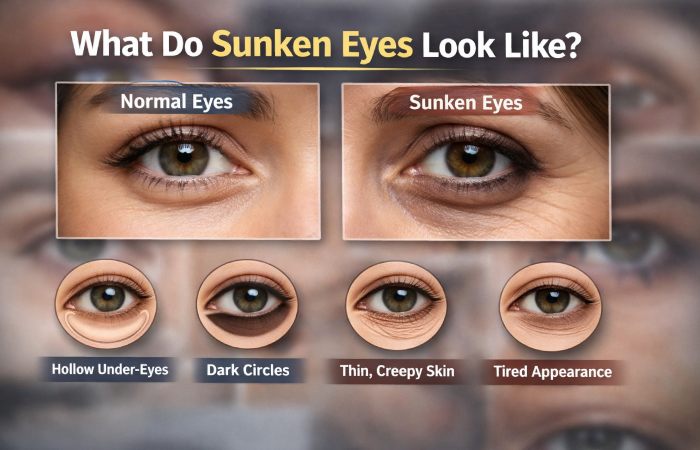
Sunken eyes are characterized by a hollow or recessed appearance around the eye socket. The under-eye area may look darker, thinner, or shadowed compared to the rest of the face.
Common Visual Signs of Sunken Eyes
| Feature | Description |
|---|---|
| Hollow under-eye area | The region beneath the eyes appears deep or hollow |
| Dark circles | Shadows or pigmentation under the eyes |
| Thin skin | The skin may look transparent or delicate |
| Deep tear trough | A visible groove from the inner eye corner toward the cheek |
| Prominent eye socket | Eyes appear deeper inside the skull |
| Tired appearance | Face looks fatigued or older |
Difference in Appearance
| Eye Type | Appearance |
|---|---|
| Normal Eyes | Smooth skin under eyes, minimal shadow |
| Mild Sunken Eyes | Slight hollowing and dark circles |
| Severe Sunken Eyes | Deep hollows and visible eye socket contours |
Sunken eyes can appear in one eye or both eyes depending on the underlying cause.
What Are the Symptoms of Sunken Eyes?
Sunken eyes may come with additional symptoms depending on the underlying health condition. For example, dehydration or allergies can cause several other signs.
Physical Symptoms
| Symptom | Explanation |
|---|---|
| Deep grooves under the eyes | Tear troughs become visible |
| Dry eyes | Reduced moisture around the eye area |
| Sagging eyelids | Eyelids may droop slightly |
| Dark pigmentation | Skin may appear darker |
| Double vision | Occurs in rare severe cases |
| Facial asymmetry | One eye may appear deeper than the other |
Certain people also experience difficulty focusing or eye dryness when the tissue around the eyes becomes weakened.
For people experiencing dry or irritated eyes along with changes around the eye area, treatments such as carboxymethylcellulose eye products may also be discussed with an eye-care professional when appropriate.
Additional Symptoms Linked to Medical Causes
| Cause | Associated Symptoms |
|---|---|
| Dehydration | Dry mouth, thirst, fatigue |
| Allergies | Itchy eyes, sneezing |
| Sinus infection | Nasal congestion, facial pressure |
| Trauma | Pain or swelling around the eye |
Causes of Sunken Eyes
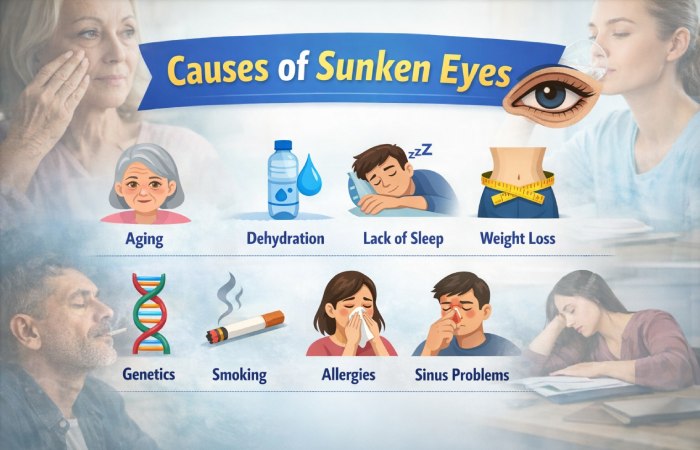
Sunken eyes can develop due to a wide variety of lifestyle factors, aging processes, or medical conditions.
Common Causes
| Cause | Description |
|---|---|
| Aging | Loss of collagen and fat around eyes |
| Dehydration | Lack of fluids causes skin shrinkage |
| Poor sleep | Insufficient sleep causes dark circles |
| Genetics | Some people naturally have deep-set eyes |
| Weight loss | Loss of facial fat creates hollowness |
| Smoking | Reduces collagen and skin elasticity |
| Sun exposure | UV rays damage skin and cause pigmentation |
| Allergies | Inflammation creates shadows under eyes |
Aging is one of the most common causes because collagen production decreases over time, making the skin thinner and causing the eye socket to appear deeper.
Medical Causes
| Medical Condition | Effect |
|---|---|
| Sinus infections | Swelling around eyes |
| Nutritional deficiencies | Weak skin tissue |
| Trauma or fractures | Changes in eye socket structure |
| Certain medications | Loss of fat around eyes |
Lifestyle habits such as smoking can accelerate the breakdown of collagen, leading to premature aging and hollow eyes.
Should You Go to the Doctor if You Have Sunken Eyes?
In many cases, sunken eyes are harmless and occur due to fatigue, dehydration, or aging. However, you should consult a doctor if the condition appears suddenly or worsens over time.
When Medical Attention Is Needed
| Situation | Reason |
|---|---|
| Sudden sunken eyes | Could indicate dehydration |
| Eye pain or swelling | Possible infection or injury |
| Vision problems | Requires eye examination |
| Severe weight loss | May indicate underlying illness |
| Persistent dark circles | Could be related to allergies or sinus issues |
Doctors may evaluate your symptoms, medical history, and lifestyle to determine the cause. Sometimes laboratory tests are recommended.
If you have persistent vision changes or other eye-related concerns, visiting a qualified eye-care provider can help determine whether you need an eye examination. You can also learn more about SpecsMakers Vanasth for additional information related to eye-care services.
Can Sunken Eyes Cause Other Conditions?
Sunken eyes themselves usually do not cause serious health problems. However, they can sometimes lead to emotional or psychological effects.
Possible Related Issues
| Condition | Explanation |
|---|---|
| Low self-esteem | Appearance concerns |
| Anxiety | Worry about facial aging |
| Depression | Social insecurity |
Appearance-related concerns can affect confidence, especially if sunken eyes are severe or accompanied by dark circles.
How Are Sunken Eyes Treated?
Treatment depends on the underlying cause. Mild cases can be improved through lifestyle changes, while severe cases may require medical or cosmetic procedures.
Lifestyle Treatments
| Treatment | Benefits |
|---|---|
| Drinking more water | Improves skin hydration |
| Getting 7–9 hours sleep | Reduces fatigue appearance |
| Healthy diet | Improves skin health |
| Sun protection | Prevents pigmentation |
| Cold compress | Reduces puffiness |
| Cucumber slices | Hydrates under-eye skin |
Medical Treatments
| Treatment | Description |
|---|---|
| Dermal fillers | Hyaluronic acid injections add volume |
| Laser therapy | Stimulates collagen production |
| Fat grafting | Fat transferred to under-eye area |
| Blepharoplasty | Cosmetic eyelid surgery |
Dermal fillers are commonly used to restore lost volume beneath the eyes caused by aging or genetics.
Sunken Eyes vs Normal Eyes
| Feature | Normal Eyes | Sunken Eyes |
|---|---|---|
| Under-eye area | Smooth | Hollow or recessed |
| Skin thickness | Healthy and plump | Thin and fragile |
| Shadowing | Minimal | Visible dark circles |
| Eye position | Balanced in socket | Appears deeper |
| Facial appearance | Fresh and youthful | Tired or aged |
Sunken Eyes Treatment Cost in India and USA
The cost of treatment depends on the procedure and clinic.
India Treatment Cost
| Treatment | Average Cost (INR) |
|---|---|
| Eye creams | ₹500 – ₹3,000 |
| Chemical peel | ₹3,000 – ₹8,000 |
| Laser treatment | ₹8,000 – ₹25,000 |
| Dermal fillers | ₹20,000 – ₹60,000 |
| Fat grafting surgery | ₹60,000 – ₹1,50,000 |
USA Treatment Cost
| Treatment | Average Cost (USD) |
|---|---|
| Eye creams | $20 – $150 |
| Chemical peel | $150 – $500 |
| Laser treatment | $500 – $2,000 |
| Dermal fillers | $600 – $1,500 |
| Fat grafting surgery | $3,000 – $8,000 |
Costs may vary depending on the clinic, doctor expertise, and city.
Sunken Eyes Specialists in India and USA
India Specialists
| Doctor | Location | Specialty |
|---|---|---|
| Dr. Rashmi Shetty | Mumbai, India | Cosmetic Dermatology |
| Dr. Kiran Lohia | Delhi, India | Aesthetic Medicine |
| Dr. Jamuna Pai | Mumbai, India | Skin & Anti-Aging |
| Dr. Niti Gaur | Gurugram, India | Dermatology |
USA Specialists
| Doctor | Location | Specialty |
|---|---|---|
| Dr. Raj Kanodia | Beverly Hills, USA | Facial Plastic Surgery |
| Dr. Jason Bloom | Pennsylvania, USA | Oculoplastic Surgery |
| Dr. Andrew Jacono | New York, USA | Facial Plastic Surgery |
| Dr. Sheila Barbarino | California, USA | Oculoplastic Surgery |
These specialists often provide treatments such as dermal fillers, laser therapy, and cosmetic eyelid surgery.
Sunken Eyes Cream
Many eye creams help improve hydration and reduce the appearance of hollow eyes.
Popular Ingredients in Eye Creams
| Ingredient | Benefit |
|---|---|
| Hyaluronic acid | Hydrates skin |
| Retinol | Stimulates collagen |
| Vitamin C | Brightens dark circles |
| Peptides | Improves skin elasticity |
| Caffeine | Reduces puffiness |
Examples of Sunken Eye Creams
| Product | Key Ingredient |
|---|---|
| RoC Retinol Correxion Eye Cream | Retinol |
| Neutrogena Hydro Boost Eye Gel | Hyaluronic acid |
| Olay Eyes Ultimate Eye Cream | Peptides |
| Kiehl’s Creamy Eye Treatment | Avocado oil |
Regular use of moisturizing creams can help improve skin texture and reduce the appearance of hollowness.
Conclusion
Sunken eyes are a common condition that can occur due to aging, dehydration, genetics, weight loss, or lifestyle habits. While they are usually harmless, they can affect appearance and self-confidence.
The good news is that sunken eyes can often be improved through simple lifestyle changes such as proper hydration, adequate sleep, and healthy nutrition. For more severe cases, cosmetic treatments like dermal fillers, laser therapy, or surgery may provide effective results.
If sunken eyes appear suddenly or are accompanied by symptoms such as pain, swelling, or vision problems, it is important to consult a medical professional. With proper diagnosis and treatment, most people can significantly improve the appearance of sunken eyes and restore a refreshed, youthful look.