Last Updated: September 1, 2026
Table of Contents
Key facts
- ‘Junk foods’ are foods that contain high levels of fat, salt or sugar, but lack nutrients such as fibre, vitamins and minerals.
- Reading nutritional information labels can help you make healthy food choices.
- Being aware of advertising ‘tricks’ can help you reduce your junk food intake.
- Limit your child’s junk food intake by encouraging healthy food choices.
- Junk food can lead to short- and long-term health complications.
This Article Is Belongs To The Healthy Eating
What is Junk Food?
Junk food is often referred to as the fast foods and it means food that is rich in calorie content but low in nutritional value. That is, they are deprived of vital nutrients, minerals, and vitamins to maintain the health of our body. Junk food contains high amounts of fats, salts and sugars. They are optional or discretionary food and have no contribution in healthy eating. Examples of some usual junk foods include:
- Bakery products like biscuits and cakes
- Fast foods, including hot chips, pizzas, and burgers
- Chocolates
- Sweets
- Processed meat
- Sugary and carbonated drinks
- Alcohols
Is Junk Food Replacing the Actual Nutrient Food?
Not so long ago, we used to have only home-cooked food. Today when eating out has become a new normal, this is difficult to digest that our parents used to allow us to have food from outside only on rare occasions. Junk food has become a new substitute for healthy eating.
Some statistics have pointed out how our eating habits have changed over the past few years. (Source:https://www.financialexpress.com/lifestyle/junk-food-becoming-menace-in-india-data-points-to-dangerous-increase-in-consumption/1679596/)
| Statistic | Description |
|---|---|
| 93% | Children consume packaged food more than once a week |
| 56% | Children eat ice creams and chocolates more than once a week |
| 59% | Children aged 14–17 consume packaged beverages or food once a day |
| 40% | Children consume packaged food at school almost daily |
Even many people in their mid-20s, 30s and 40s rely on junk food to satisfy their hunger due to lack of time or insufficient cooking skills.
A significant issue associated with these food products is low value of satisfaction. Each time we consume junk food, we have this feeling that we want to take more. We keep on overeating despite consuming a large amount of junk food. This excessive eating practically substitutes the nutrient food in your diet. The excessive drinking of carbonated beverages may replace the dairy products such as milk and curd in your day-to-day meal portions. Snacking chips and cookies all day long leaves no room to have fruits and vegetables. Although the amount of calories that come with even smaller portions of fast food is more than the daily-require value of calories as per various studies. Therefore excessive consumption of fast foods predisposes us to become overweight and become the target of other medical complications.
How Do I Make Healthy Food Choices?
You have to be familiar with what you are putting in your food to make healthy food choices. The nutrition information on the back of the package will make you understand the nutritional value by reading it.
Food labels tell you the amount of each nutrient in 100 grams of the product, such as:
- Energy (Shown As Calories Or Kilojoules)
- Protein
- Fat
- Carbohydrate
- Sugars
- Fiber
- Sodium (Salt)
Products with high levels of fat, salt or sugar are less healthy. When choosing a healthy food look for:
| Nutrient | Recommended Level |
|---|---|
| Saturated Fat | Below 3 g per 100 g |
| Total Fat | Below 10 g per 100 g |
| Sodium | Below 400 mg per 100 g |
| Added Sugar | Less than 15 g per 100 g |
The food labels also tell you the recommended serving size.
Junk Food Consumption Trends in Different Countries
| Country | Primary Group Studied | Junk Food Consumption Pattern | Estimated Prevalence |
|---|---|---|---|
| United States | Children & Adolescents | Fast food / ultra-processed food consumed at least once a week | ~80–90% |
| United Kingdom | Children | High intake of packaged snacks, sugary drinks weekly | ~70–80% |
| India | Urban children & teens | Packaged snacks, sugary beverages consumed weekly | ~60–70% |
| Australia | Adolescents | Energy-dense, nutrient-poor foods consumed weekly | ~75% |
| Canada | Children | Fast food or packaged snacks consumed weekly | ~70% |
| China | Urban youth | Rising consumption of Western fast food and packaged items | ~50–60% |
| Brazil | Adolescents | Ultra-processed foods consumed frequently | ~65% |
| Mexico | Children | Sugary drinks and packaged foods consumed almost daily | ~70% |
| Japan | Adolescents | Lower junk food intake compared to Western countries | ~40–50% |
| South Africa | Urban youth | Increasing intake of fast food and sugary beverages | ~60% |
How Can I Help My Children Grow Up With Healthy Eating Habits?
As a parent of a young child you are in control of what food is given to your child. You can encourage healthy eating habits by:
- Planning Regular Mealtimes
- Not Using Food As A Bride Or Reward
- Offering Healthy Snacks
- Being A Role Model
It’s best to avoid calling food ‘good’ or bad’ as it can lead to negative feelings about food and unhealthy eating habits.
Discretionary and Ultra-processed foods for children should be limited. Remember that the ingredients are listed from largest to smallest by weight when reading food labels.
If the first 3 ingredients include sugar, saturated fat or salt the product might not be a healthy choice for your child.
Sometimes food companies often use different names for added salt, sugar and fat. Click here to find out more.
Do not give young children hard food such as lollies, popcorn and chips as they can choke.
Can I Include A Small Amount of Junk Food in A Healthy Diet?
Yes, Australian Dietary Guidelines says that a little quantity of ultra-processed foods may be incorporated in a balanced diet of healthy proportions.
This implies that you can only consume junk food a few times and in a small portion. Generally, the majority of Australians consume excessive amounts of junk food, which they need to lower, with a reduced frequency.
There are even more treats that can be consumed in the context of a healthy and active lifestyle. More ideas on how to remain active, this way.
When thinking about how much junk food you eat, remember that everybody is different. You will need to eat less than the average person if you are:
- Shorter Or Smaller Than Average
- Exercise Less Than Average
- Trying To Lose Weight
Check the Australian Dietary Guidelines for more information about understanding your food and drink intake. You can also explore this guide on how to prepare a healthy diet salad for a nutritious food option.
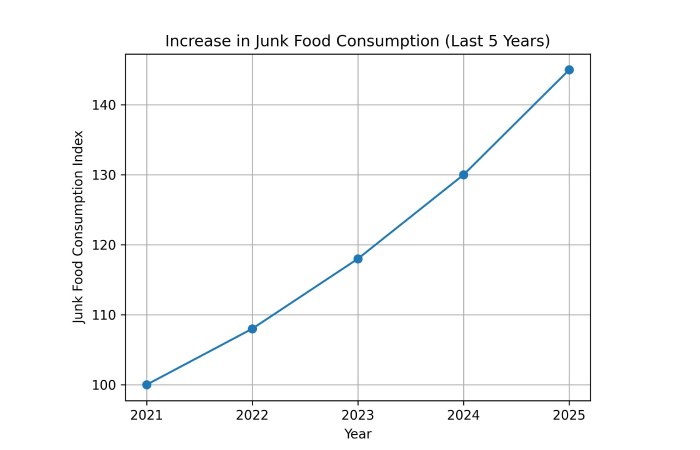
Increase in Junk Food Last 5 Years
Does Eating Junk Food Cause Health Complications?
Eating too much junk food can have a negative effect on your general health and wellbeing. It can also reduce your ability to be active.
| Short-term Effects of Junk Foods | Long-term Effects of Junk Foods |
|---|---|
| Increased Stress Levels | Type 2 Diabetes |
| Fatigue (Feeling Tired) And Decreased Energy Levels | Heart-Related Problems (Such As Cardiovascular Disease, High Blood Pressure And Cholesterol) |
| Difficulty Sleeping | Overweight And Obesity |
| Concentration Difficulties | Osteoporosis |
| Feeling Down | Certain Cancers |
| Tooth Decay | Depression |
| Eating Disorders |
Conclusion
The increase in the use of junk and ultra-processed foods in the last few years suggests an increasing problem in the health of the population. As the recent tendencies demonstrate, the rising dependency on packaged as well as high-fat, high-sugar and high-salt meals is compromising the quality of the diet as well as the health of both children and adults, leading to poorer diets and health risks. It is important to note that the shift in eating habits is serious as the effects can be both short-term (low energy, poor concentration, dental problems, etc.) and long-term (obesity, diabetes, cardiovascular diseases, and mental health problems, etc.).
According to the WHO and FSSAI guidelines, the problem is an abrupt necessity to popularize healthier food options by adjusting to the nutrition ideology, better labeling, and eating less junk. Active promotion of the consumption of balanced diets through the consumption of fruits, vegetables, whole grains, and minimally processed food can be crucial in the overall health outcomes and decreasing the burden of diet-related non-communicable diseases over time. For more information on making healthier choices between beverages, read about fruit juice vs. whole fruit.
For additional evidence-based information about healthy eating patterns, you can refer to the World Health Organization’s healthy diet guidance.