

Last Updated: September 29, 2026
We all experience the sensation of acid in the stomach or acid reflux after eating a large meal but if you suffer regularly from this sensation or it is a sensation that continues to come back up into your throat, then you may have gastroesophageal reflux disease or GERD.
Medications can help and either neutralise or lower acid production in the stomach. All these types are effective in different circumstances and must be taken if symptoms continue.
This Article Is Belongs To The Pharmacy & Medicines
Table of Contents
What Is Gastroesophageal Reflux Disease Medication?
GERD medicines are the calculated primarily to control symptoms and, in some cases, protect or settle the oesophageal lining.
The main categories are:
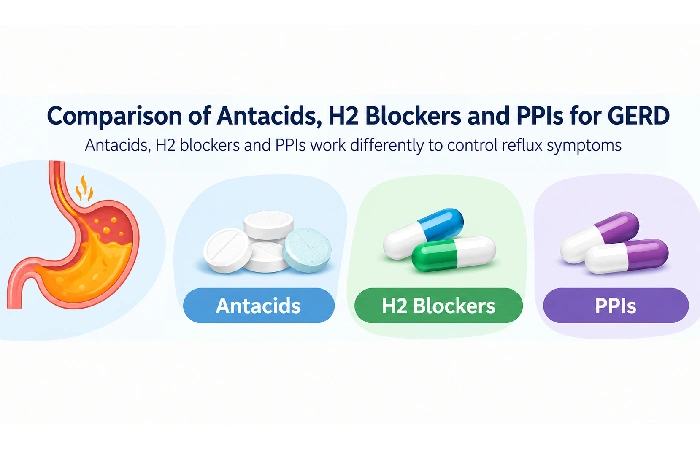
- Antacids: Neutralise current stomach acid and can provide fairly quick relief from the mild, occasional indigestion.
- H2 blockers: Cut the sum of acid produced by the stomach.
- Proton pump inhibitors (PPIs): More strongly suppress belly acid and are usually used when GERD symptoms occur frequently or when healing of the oesophagus is needed.
Some products are the available without a prescription, while others may require one depending on medicine, strength and country.
Types of Gastroesophageal Reflux Disease Medication
| Medication type | How it works | Typical role | Main limitation |
| Antacids | Neutralise stomach acid | Occasional, mild symptoms | Not intended for routine treatment of severe or persistent symptoms |
| H2 blockers | Reduce stomach acid production | Mild-to-moderate or intermittent symptoms | Generally less effective than PPIs for the healing oesophageal damage |
| PPIs | Strongly reduce stomach acid production | Frequent GERD and healing oesophageal irritation | Long-term or high-dose use should be reviewed with healthcare professional |
NIDDK notes that PPIs are generally with more effective than H2 blockers for GERD symptoms & healing the oesophageal lining.
How Does GERD Medication Work?
The treatment approach depends partly on how often symptoms occur.
Step 1: Identify the symptoms
What are the symptoms of GERD? Heartburn and regurgitation where usual symptoms of GERD. Some individuals could have chest pain, nausea, problem swallowing, or a cough or hoarseness.
Step 2: Consider symptom frequency
If you are experiencing periods of infrequent mild heartburn.
Step 3: Choose an appropriate medicine
A pharmacist or doctor can help you to decide whether an antacid, H2 blocker or PPI would be appropriate.
What Results Should You Expect?
An antacid offers temporary relief from mild symptoms, whereas acid-reducing medications operate by modifying acid production rather than neutralizing existing acid.
Lifestyle factors could be helpful too. Eating at least three hours before going to sleep may help if you have symptoms that occur at night. If you are overweight or have obesity, losing weight could help.
Pros and Limitations
Potential benefits
- Can reduce indigestion and acid-related symptoms.
- Some medicines work relatively quickly for chance symptoms.
- PPIs can help heal an cross oesophageal lining.
- Some options are available depending on sign patterns.
Limitations
- Medicines do not necessarily address every causal cause of reflux.
- Some products can cause side effects.
- Common or prolonged self-treatment may delay assessment of another condition.
- Acid-reducing medicines can interact with certain other medicines. The FDA notes that changing stomach sharpness can affect the absorption of some medicines.
Safety and Side Effects
All medicines have potential risks. It is important to be aware that some antacids can cause side-effects such as constipation or diarrhoea – which of these occurs will depends on the antacids themselves. PPI side effects can include headache, diarrhea and a sour stomach.
Who Should Seek Medical Advice?
You must speak with a healthcare professional if symptoms continue in spite of lifestyle changes or over-the-counter treatment.
Medical assessment is particularly important if you have:
- Difficulty or pain when buying
- Persistent vomiting
- Unsolved weight loss
- Vomiting blood or material resembling coffee grounds
- Black, tarry stools
- Persistent or concerning chest pain
These signs can indicate problems or another medical condition needful prompt assessment.
Alternatives and Lifestyle Measures
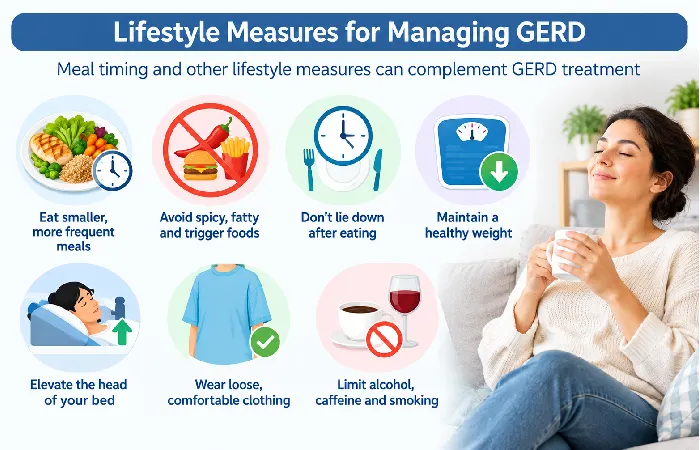
Lifestyle modifications are part of the treatment of GERD, along with medication. For some people, lifestyle factors that can be modified are: eating smaller meals; avoiding specific food triggers of reflux and not lying down immediately after eating.
What are common triggers? Commonly reported foods and drinks that trigger migraines include: spicy foods, high-fat foods, chocolate, mint, coffee, alcohol, tomatoes and citrus foods. This list may be different for each individual.
When Medication May Not Be Enough
If your symptoms aren’t improved by medication or lifestyle changes, you should have your symptoms checked out by a doctor to make sure you don’t have other complications as a result of reflux. They might perform an upper gastrointestinal endoscopy or other tests, depending on your symptoms.
Faq’s
What is the most common gastroesophageal reflux disease medication?
The most common types of treatment include antacid, H2 blocking and proton pump inhibitors (PPIs). The correct choice will depend on how frequent and severe the symptoms are, and if oesophageal irritation or other complications are evident.
Can I take gastroesophageal reflux disease medication every day?
Some medicines for GERD are also used for more prolonged treatment (for example, PPIs in suitable patients). However it is strongly advised that the long term use is in discussion with your physician and not undertaken through self-medication.
Are antacids enough for GERD?
Antacids may provide relief from mild, occasional GERD, but should not be relied on as a cure for moderate to severe, persistent GERD. Consult a doctor if symptoms are occurring often.
Can lifestyle changes reduce the need for GERD medication?
In some people, lifestyle modifications may help relieve symptoms. Eating schedules, finding personal food triggers, and weight loss if recommended can all be helpful in managing GERD.
Conclusion
Medications for Gastroesophageal Reflux Disease Medication to help with heartburn, regurgitation and other symptoms of acid reflux may also be beneficial. Depending on what symptoms someone has and other medical factors, antacids, H2 blockers or PPIs are prescribed.
Occasional Symptoms – Short term treatment will suffice. If the recurring, abnormal or deteriorating symptoms aren’t something you can just continue to try over the counter remedies then you should consult a medical practitioner who can accurately identify the source and recommend a safer long term treatment.