Last Updated: September 2, 2026
Carboxymethylcellulose eye drops have become one of the most widely used solutions for relieving dry, irritated, and strained eyes. Whether caused by prolonged screen time, environmental factors, or medical conditions, dry eye symptoms can significantly affect daily comfort and productivity. These lubricating drops provide quick and effective relief by mimicking natural tears and restoring moisture to the eyes.
In this comprehensive guide, we will explore everything you need to know about carboxymethylcellulose eye drops, including how they work, their benefits, usage instructions, pricing, and where you can buy them both online and offline.
This Article Is Belongs To The Eye Care
Table of Contents
What Are Carboxymethylcellulose Eye Drops?
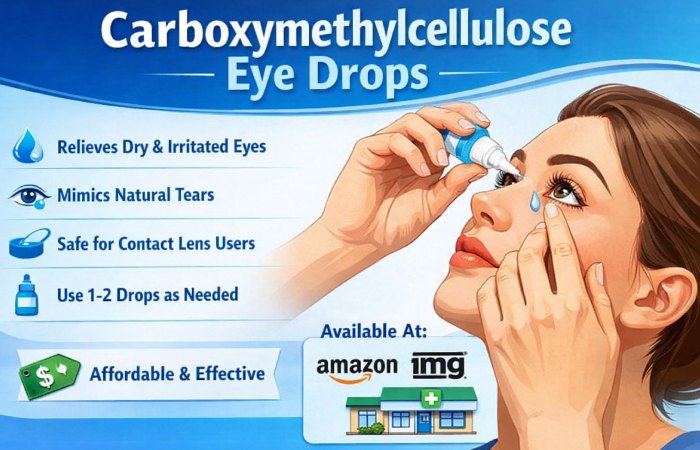
Carboxymethylcellulose (CMC) is a type of artificial tear solution used to treat dry eyes. It belongs to a class of medications known as ocular lubricants. These drops help maintain moisture on the outer surface of the eyes and protect them from irritation.
Popular products include:
- Refresh Tears
- Celluvisc
- Refresh Liquigel
These formulations vary slightly in thickness and concentration but serve the same purpose: lubrication and hydration.
How Do Carboxymethylcellulose Eye Drops Work?
Carboxymethylcellulose acts as a viscosity enhancer. It forms a protective layer over the eye’s surface, reducing tear evaporation and improving moisture retention. This helps:
- Relieve dryness and irritation
- Improve tear film stability
- Protect against environmental damage (dust, smoke, wind)
The drops closely mimic the consistency of natural tears, making them comfortable for regular use.
Key Benefits of Carboxymethylcellulose Eye Drops
Carboxymethylcellulose eye drops are highly effective for a wide range of eye-related discomforts. Their popularity comes from their versatility and safety profile.
Main Advantages
- Provides long-lasting hydration
- Suitable for frequent use
- Helps reduce redness and irritation
- Safe for contact lens users (in most formulations)
- Minimal side effects
Common Uses
These eye drops are commonly recommended for:
| Condition | How It Helps |
|---|---|
| Dry Eye Syndrome | Restores moisture and reduces discomfort |
| Digital Eye Strain | Soothes eyes after screen exposure |
| Allergies | Reduces irritation caused by allergens |
| Post-Surgery Care | Keeps eyes lubricated during healing |
| Environmental Exposure | Protects against dust, wind, and pollution |
Types of Carboxymethylcellulose Eye Drops
Different formulations are available depending on your needs.
| Type | Description | Best For |
|---|---|---|
| Standard Drops | Light consistency | Mild dryness |
| Gel Drops | Thicker formulation | Moderate dryness |
| Preservative-Free | No added chemicals | Sensitive eyes |
| Single-Use Vials | Sterile, disposable | Travel and hygiene |
How to Use Carboxymethylcellulose Eye Drops
Using eye drops correctly ensures maximum effectiveness.
Step-by-Step Instructions
- Wash your hands thoroughly
- Tilt your head back
- Pull down the lower eyelid
- Instill 1–2 drops into the eye
- Close your eyes for a few seconds
- Avoid touching the dropper tip
Dosage Guidelines
| User Type | Recommended Usage |
|---|---|
| Adults | 1–2 drops, 3–4 times daily |
| Heavy Screen Users | As needed throughout the day |
| Post-Surgery Patients | As prescribed by a doctor |
Side Effects and Precautions
Carboxymethylcellulose eye drops are generally safe, but some users may experience mild effects.
Possible Side Effects
- Temporary blurred vision
- Mild eye irritation
- Stickiness in eyelashes
Precautions
- Do not use if the solution changes color
- Avoid touching the dropper to prevent contamination
- Consult a doctor if symptoms persist
Price of Carboxymethylcellulose Eye Drops
Prices vary depending on brand, packaging, and location. Below is an estimated price range in India and internationally.
| Brand | Pack Size | Price (India ₹) | Price (USD $) |
|---|---|---|---|
| Refresh Tears | 10 ml | ₹150 – ₹250 | $5 – $10 |
| Celluvisc | 0.4 ml (30 vials) | ₹400 – ₹700 | $10 – $18 |
| Refresh Liquigel | 10 ml | ₹200 – ₹350 | $6 – $12 |
| Generic CMC Drops | 10 ml | ₹80 – ₹150 | $3 – $6 |
Prices may vary based on pharmacy and location.
Where to Buy Carboxymethylcellulose Eye Drops
These eye drops are widely available both online and offline.
Online Stores
| Platform | Availability | Benefits |
|---|---|---|
| Amazon | Widely available | Discounts and fast delivery |
| Flipkart | Available in India | Competitive pricing |
| 1mg | Prescription + OTC | Trusted pharmacy |
| PharmEasy | Wide selection | Home delivery |
Offline Stores
| Store Type | Examples | Benefits |
|---|---|---|
| Local Pharmacies | Apollo Pharmacy, MedPlus | Immediate availability |
| Hospital Pharmacies | Clinic-based stores | Doctor-recommended brands |
| Supermarkets | Health sections | Convenient purchase |
For people looking for professional eye-care services or assistance with vision-related concerns, visiting a local optical or eye-care provider can also be helpful. You can learn more about SpecsMakers Vanasth as an additional eye-care resource.
Country-Wise Availability
Carboxymethylcellulose eye drops are globally accessible.
| Country | Availability | Notes |
|---|---|---|
| India | Widely available | OTC in most pharmacies |
| USA | Easily available | Multiple branded options |
| UK | Available in pharmacies | NHS may recommend |
| Canada | Common OTC product | Available in drugstores |
| Australia | Widely sold | Often pharmacist-recommended |
Tips for Choosing the Right Eye Drops
Selecting the right product depends on your specific needs.
- For mild dryness: Standard drops
- For severe dryness: Gel-based drops
- For sensitive eyes: Preservative-free options
- For travel: Single-use vials
Storage and Shelf Life
Proper storage ensures the effectiveness of the drops.
| Factor | Recommendation |
|---|---|
| Storage Temperature | Room temperature (15–25°C) |
| Shelf Life (Unopened) | 1–2 years |
| After Opening | Use within 30 days |
| Exposure | Keep away from sunlight |
When to See a Doctor
While these drops are effective for mild to moderate dryness, medical attention may be needed if:
- Symptoms persist for more than a week
- Severe pain or vision changes occur
- There is excessive redness or discharge
Conclusion
Carboxymethylcellulose eye drops are a reliable and accessible solution for managing dry eyes and related discomfort. Their ability to mimic natural tears makes them an essential addition to daily eye care, especially for individuals exposed to digital screens, pollution, or dry environments.
With multiple brands like Refresh Tears and Celluvisc available at affordable prices, finding the right option is easier than ever. Whether purchased online through platforms like Amazon or from a nearby pharmacy, these eye drops offer convenience, effectiveness, and comfort.
By understanding their usage, benefits, and availability, you can make an informed decision and maintain optimal eye health in your daily life.