

Last Updated: September 2, 2026
Getting in shape can feel overwhelming when you’re just starting out. With so much information available online—conflicting workout plans, diet trends, and fitness myths—it’s easy to feel stuck before you even begin. The truth is, getting in shape doesn’t require extreme diets or complicated routines. It’s about building simple, sustainable habits that improve your strength, endurance, and overall health over time.
This beginner-friendly guide will walk you through everything you need to know—from setting realistic goals and creating a workout routine to understanding nutrition and staying consistent. By the end, you’ll have a clear roadmap to start your fitness journey with confidence.
This Article Is Belongs To The Workouts & Exercise
Table of Contents
Understanding What “Getting in Shape” Means
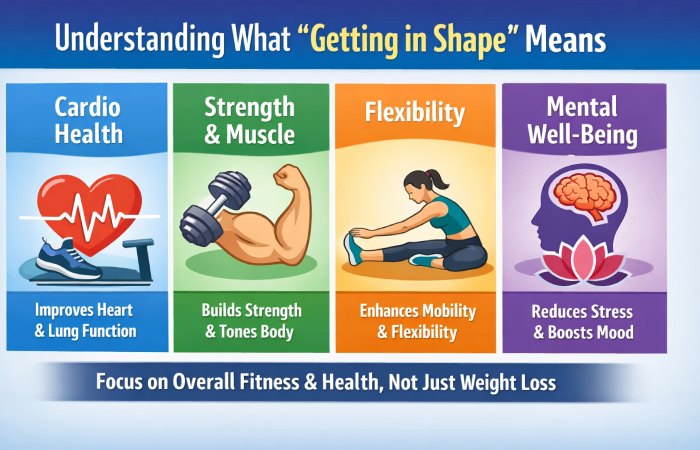
Before diving into workouts and diets, it’s important to understand what “getting in shape” really means. It’s not just about losing weight or building muscle—it’s about improving your overall fitness, which includes cardiovascular health, strength, flexibility, and mental well-being.
Getting in shape is a gradual process. Your body needs time to adapt to new physical demands. Instead of aiming for quick results, focus on steady progress. This mindset helps prevent burnout and injuries while ensuring long-term success.
Setting Realistic Fitness Goals
One of the most common mistakes beginners make is setting unrealistic goals. Wanting to lose 10 kg in a month or get six-pack abs in a few weeks can lead to frustration and disappointment.
Start with small, achievable goals. For example, aim to work out three times a week or walk 5,000–7,000 steps daily. As you build consistency, you can gradually increase your targets.
Goal-Setting Framework
| Goal Type | Example Goal | Time Frame | Why It Works |
|---|---|---|---|
| Short-term | Walk 20 minutes daily | 2 weeks | Builds consistency |
| Medium-term | Lose 2–3 kg | 1–2 months | Achievable and measurable |
| Long-term | Improve overall fitness | 6+ months | Focuses on sustainability |
| Performance-based | Do 10 push-ups continuously | 4–6 weeks | Tracks strength improvement |
Building a Beginner Workout Routine
Starting a workout routine doesn’t mean spending hours at the gym. A simple, balanced routine that includes cardio, strength training, and flexibility exercises is enough.
For a more structured approach, you can also explore this training plan for a healthy week to see how different types of physical activity can be organized throughout the week.
For general adult physical activity recommendations, beginners can refer to the CDC’s physical activity guidelines, which provide evidence-based recommendations for aerobic and muscle-strengthening activities.
Weekly Workout Plan for Beginners
| Day | Activity Type | Example Workout | Duration |
|---|---|---|---|
| Monday | Cardio | Brisk walking or cycling | 20–30 min |
| Tuesday | Strength Training | Bodyweight exercises | 20 min |
| Wednesday | Rest/Active Recovery | Light stretching or yoga | 15–20 min |
| Thursday | Cardio | Jogging or skipping | 20–30 min |
| Friday | Strength Training | Full-body workout | 20–25 min |
| Saturday | Flexibility | Yoga or mobility exercises | 20 min |
| Sunday | Rest | Complete rest | — |
For general adult guidance, the CDC recommends at least 150 minutes of moderate-intensity aerobic activity per week along with muscle-strengthening activities on at least two days each week. Beginners do not need to reach that amount immediately; starting with manageable activity and gradually building up can be more realistic.
Essential Beginner Exercises
When starting out, focus on basic exercises that target multiple muscle groups. These movements help build strength and coordination.
Basic Exercises and Their Benefits
| Exercise | Target Area | Benefits | Reps/Sets |
|---|---|---|---|
| Squats | Legs & glutes | Improves lower body strength | 10–15 x 2–3 |
| Push-ups | Chest & arms | Builds upper body strength | 5–10 x 2–3 |
| Plank | Core | Enhances core stability | 20–30 sec x 3 |
| Lunges | Legs | Improves balance and coordination | 8–12 each leg |
| Jumping jacks | Full body | Boosts cardiovascular fitness | 20–30 x 2 |
Importance of Warm-Up and Cool-Down
Skipping warm-ups and cool-downs is a common mistake among beginners. A proper warm-up prepares your body for exercise, while a cool-down helps your muscles recover.
Warm-ups increase blood flow and reduce the risk of injury. Even 5–10 minutes of light movement like walking or dynamic stretching can make a big difference. Similarly, cooling down with gentle stretches can help you transition gradually from exercise to rest.
Nutrition for Beginners
Exercise alone isn’t enough to get in shape. Your diet plays a crucial role in supporting your fitness goals. Instead of following strict diets, focus on balanced nutrition.
A healthy diet includes proteins, carbohydrates, healthy fats, vitamins, and minerals. Eating whole, minimally processed foods can help provide the nutrients needed to support daily activity and recovery.
Basic Nutrition Guidelines
| Nutrient | Role in Body | Food Sources | Daily Tip |
|---|---|---|---|
| Protein | Builds and repairs muscles | Eggs, chicken, lentils, tofu | Include in every meal |
| Carbohydrates | Provides energy | Rice, oats, fruits | Choose complex carbs |
| Fats | Supports hormone function | Nuts, seeds, olive oil | Avoid trans fats |
| Fiber | Aids digestion | Vegetables, whole grains | Eat more greens |
| Water | Maintains hydration | Water, coconut water | Drink regularly |
Hydration and Its Role in Fitness
Staying hydrated is essential for maintaining energy levels and supporting normal body functions. Water helps regulate body temperature, transport nutrients, and support muscle function.
Beginners often underestimate hydration, especially during workouts. Drink water before, during, and after exercise according to your thirst, activity level, climate, and individual needs.
Rest and Recovery
Rest is just as important as exercise. When you work out, your muscles experience temporary stress and need time to recover and adapt. Without proper rest, you may experience excessive fatigue and reduced performance. Aim for adequate sleep each night and include rest or lighter-activity days in your routine.
Signs You Need More Rest
| Symptom | What It Means | Solution |
|---|---|---|
| Constant fatigue | Possible inadequate recovery | Take rest days |
| Muscle soreness | Need for recovery | Reduce intensity and recover |
| Poor performance | Body needs recovery | Reduce workout intensity |
| Sleep issues | Stress or overexertion | Improve sleep routine |
Staying Consistent and Motivated
Consistency is the key to getting in shape. Motivation may come and go, but building habits ensures long-term success.
Start by creating a routine that fits your lifestyle. Whether it’s morning workouts or evening walks, choose a time that you can stick to regularly.
Tracking your progress can also boost motivation. Keep a journal or use a fitness app to record your workouts, weight, and measurements.
Common Beginner Mistakes to Avoid
Many beginners make mistakes that slow down their progress or lead to injuries. Being aware of these can help you stay on track.
Mistakes and Solutions
| Mistake | Impact | How to Avoid |
|---|---|---|
| Skipping warm-ups | Increased injury risk | Always warm up |
| Overtraining | Burnout and fatigue | Follow a balanced schedule |
| Poor diet | Slow progress | Eat balanced meals |
| Lack of consistency | No visible results | Stick to routine |
| Comparing with others | Loss of motivation | Focus on your journey |
Tracking Progress Effectively
Progress isn’t just about the number on the scale. You may notice improvements in strength, endurance, and energy levels even if your weight doesn’t change significantly.
Take weekly measurements, track your workouts, and note how you feel. These indicators provide a more complete picture of your progress.
Creating a Sustainable Fitness Lifestyle
Getting in shape is not a one-time goal—it’s a lifelong commitment. The key is to create habits that you can maintain in the long run.
Avoid extreme diets or intense workout programs that are difficult to sustain. Instead, focus on gradual improvements that fit into your daily routine.
Make fitness enjoyable by trying different activities like dancing, swimming, or hiking. When you enjoy what you do, you’re more likely to stay consistent.
You can also use resources such as Fitnessyork.com as supplementary reading when exploring general fitness topics. However, online fitness information should complement—not replace—guidance from qualified professionals when you need individualized advice.
Beginner Fitness Checklist
| Category | Action Step | Frequency |
|---|---|---|
| Exercise | Follow a weekly workout plan | 4–5 times/week |
| Nutrition | Eat balanced meals | Daily |
| Hydration | Drink enough water | Daily |
| Sleep | Get adequate sleep | Daily |
| Progress | Track results | Weekly |
| Recovery | Take rest days | 1–2 times/week |
Final Thoughts
Starting your fitness journey as a beginner may feel challenging, but it’s one of the most rewarding decisions you can make for your health. The key is to start small, stay consistent, and be patient with yourself.
Remember, progress takes time. Focus on building healthy habits rather than chasing quick results. With dedication and the right approach, getting in shape becomes not just achievable—but sustainable for life.
If you stay consistent with your workouts, maintain a balanced diet, and prioritize rest, you’ll gradually notice improvements in your strength, energy, and overall well-being. The journey may not always be easy, but every step forward brings you closer to a healthier and stronger version of yourself.